Transnational Research Associates
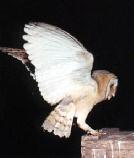
FEEDING HABITS AND HABITAT USE OF THE BARN OWL, TYTO ALBA
Researched and Written by A. F. Madsen, M.Ed. and J. Snow, B.Sc.
INTRODUCTION
This paper, in accordance with scientific requirements, consists of a direct, concise Review of Literature relating to current research on Tyto alba. The Review is followed by a Research Proposal focused on exploring the diurnal feeding habits of the Barn Owl. Existing literature is deficient in this area, since Tyto alba is a nocturnal predator. Habitat use and food consumption patterns relating to the Barn Owl are described within the Proposal section, providing a solid basis for the Research Project. This is followed, in turn, by a Methods section outlining the approach to be taken in gathering and documenting evidence for the proposed study.
REVIEW OF LITERATURE
Extensive studies on Tyto alba have been conducted and published. The existing literature on Tyto alba is both wide-ranging and voluminous. For purposes of this review a representative sampling of articles and books will be presented. The material analyzed will range from detailed, but fairly general journal articles to the more narrowly focused studies published by ornithologists interested in specific aspects of Barn Owl behavior, habits, characteristics or reproductive patterns. This survey will provide the reader with an overview of existing research available at most academic libraries.
Carl Marti in his article entitled "Barn Owl" provides a detailed examination of all major features of Tyto alba (Marti 1992). His comments begin with general observations concerning relevant habitat, distinguishing characteristics of the Barn Owl, and move on toward the distribution and migratory patterns of this nocturnal predator.
Marti seems particularly adept at analyzing the food habits of the barn owl,
and his descriptive narration of their varied preferences and feeding habits is worthy of serious attention. Marti also focuses on the habitat in some detail, as it relates to the barn owl's diet, storage patterns and selection of nesting sites. Behavioral sections of his article are worthy of study, as are analytical comments on reproduction with emphasis on nurturing and rearing of the young.
D.S. Bunn builds on a similar theme in his "Regular Daylight Hunting by Barn Owls" (Bunn 1972). He pursues the unusual and relatively rarely explored sub-topic of the diurnal predatory habits of Tyto alba. Bunn discusses the frequency and duration of their daytime hunting patterns and makes objective comparisons to other raptors and predators, some of which are largely nocturnal hunters as is the Barn Owl. His article seems based on statistical findings and on personal scientific observations inasmuch as he provides a well documented Table of results gathered at dawn over an extended period of time in Yorkshire, England. Bunn invites further reports of diurnal hunting activity largely because nocturnally based studies are readily available.
Collaborating with a professional colleague, A.B. Warburton, Bunn co-authored another article(Warburton 1977 Bunn 1977). It deals to a limited degree with feeding as it pertains to owlet and adult interaction. While the habitat is referred to only peripherally within the context of breeding phenomena, the authors do mention its importance to proper predation and resultant growth of individual families and clutches. This article seems, however, to focus primarily on behavioral traits of owlets during the nurturing and rearing period.
Although Barn Owls capture a relatively wide spectrum of rodents, attention is occasionally focused on the number of bats consumed (Rupreacht 1979). Over 1000 collections of Barn Owl pellets resulted in the discovery of nearly 474, 436 skeletal remains of vertebrates. Rupreacht analyzes these remains and determines the types and percentages of various species of bats which had been consumed by Tyto alba in Poland. Not only were the feeding habits of the Barn Owl analyzed, but more information was forthcoming regarding the prevalence of certain species of bats and other prey in the regions of Poland studied.
The author also cites other European studies and concludes that some 18% of bats consumed in Europe may reasonably be thought to be killed by "owls" in the general sense of the term.
In an apparently unrelated remark, Rupreacht suggests, at the end of his article, that more research on the sharing by bats and owls of roosting sites be undertaken.
A major work deserving of attention in this Review of Literature is that of Iain Taylor of the University of Edinburgh whose recent book provides in-depth coverage of all aspects of the Barn Owl with special emphasis on ecological issues and conservation(Taylor 1994). However, at least three entire chapters are devoted to the prey and predator relation, as the title suggests, and every aspect of Tyto alba's life is observed and analyzed in minute detail. Taylor cites authorities in his field and includes copious graphics, photos and illustrations throughout his text.
Considerable light was shed on Barn Owls' predatory habits and tactics in a brief study published in the Avicultural Magazine (Trollope 1971). Over time, he found that, although the female was unresponsive when caged, the male practiced hunting techniques on a regular basis at dusk and seemed to adapt to the aviary in which he was being observed. Trollope discusses the habits of Barn Owls in captivity, as observed, in considerable detail providing what may be some valid clues to behavior in the wild. He acknowledges that he probably overfed his captive owls, but notes that his conclusions may still prove to be accurate. The article focuses heavily on breeding patterns and feeding techniques.
In a formal study of active populations of Tyto alba in brackish salt marshes on the Maryland coast, Bendel andTerres (1964), employed by the Maryland Department of Natural Resources, concluded that certain marshy areas were less conducive to expansion of owl populations than others due to an insufficiency of small mammals in the area, and types of nesting sites available. They discuss feeding habits only as they relate to the incidence of mortality among young owls. Surprisingly high numbers of Barn Owls perish prior to maturity due to a number of factors. This report is not targeted specifically to the predatory habits of Tyto alba, but focuses rather on factors leading to death among young owls in the mid-Atlantic States. It does not provide insight into the feeding habits of Barn Owls in this region, and is of substantially less value than other articles selected for review.
The capability of Tyto alba to locate the sounds and vibrations of potential prey, in addition to their heightened ability to distinguish various alarm calls, is discussed in considerable detail in an article appearing in IBIS (Shalter 1977 Schleidt 1977). The authors describe in acoustical terms the pitch, frequency and intensity of Barn Owl and prey alarm calls. The results of their findings are discussed with reference to the impressive ability of Barn Owls to localize prey and distinguish among species, both diurnally and nocturnally. The researchers conclude, among other things, that the Barn Owl is intelligent enough to avoid useless" energy expenditure" by pursuing prey known to be elusive.
An all-inclusive study of Barn Owls in Argentina was executed by A. Travaini and J. Donazar from the Biological Research Station of Seville (Spain), in association with other colleagues and scholars (Travaini 1964 Donazar 1964). Their analysis of owl pellets collected at various elevations in the Patagonian Andes indicated a pattern of predation involving rodents and insects which they documented carefully. Their results provided new information regarding the probable feeding habits, diurnal and nocturnal, of Tyto alba in Argentina with implications for other locations.
The foregoing articles represent a wide range of research interests involving the feeding habits of Barn Owls in a number of dispersed geographic locations. They indicate that some areas of research need to be pursued more thoroughly, particularly insofar as the diurnal feeding habits of Tyto alba are concerned, which have been under-documented in the existing literature.
PROPOSAL: DIURNAL CONSUMPTION PATTERNS AND HABITAT USE OF TYTO ALBA
This ornithological research proposal concerns the possibility of investigating a specific aspect of the symbiotic relationship of the Barn Owl Tyto alba, a reasonably well known raptor, and its North American environment. It is proposed that the investigation focus on the diurnal feeding habits of Tyto alba, with reference to predation patterns, food preference and the habitat use of this avian species. The underlying hypothesis of the research project will be that, although the Barn Owl is principally nocturnally oriented, this species does engage in a discernable pattern of diurnal hunting behavior. The proposal will involve the analysis and evaluation of existing data pertaining to diurnal habits and will attempt to demonstrate the need for undertaking further study, beyond results obtained to date, as suggested by D.S. Bunn and other noted specialists in this field (Bunn 1972).
Prior to discussing the parameters of the proposed project, however, it is essential to review some of the primary feeding characteristics of Tyto alba, both during the day and after sunset. Reference will also be made to other relevant patterns of behavior in order to establish the usefulness and applicability of the proposed research.
The population density of the barn owl is dependent upon prey density and habitat quality. The ecological relationship between predator and prey who occupy a given territory reflects an animal's function within a specific niche. A "niche" can be defined as the smallest ecological unit inhabited by an individual.
The primary prey species of the barn owl are, according to The Birds of North America, small mammals. (Marti 1992) Food capture and consumption occur primarily at night. Hunting reportedly begins one hour after sunset and one hour before sunrise. Of course, the hunting schedule is variable. Occasionally hunts are diurnal, but are largely nocturnal, as confirmed by Marti (1992) and by Bunn (1972 ).
While diurnal birds seem to attend to visual stimulation, nocturnal birds respond to sound and vibration. Barn owls are particularly adept at localizing prey by sound. European studies have documented the auditory and sensory acuity of European varieties of the Barn Owl, notably the Chouette Effraie of France, and have determined that its localization capabilities surpass virtually any other avian species. (Knudsen 1981 Marti 1992). The barn owl is able to memorize specific sounds and this ability assists immeasurably in distinguishing prey-size and, hence, vulnerability to attack. At night, it can detect prey hidden under vegetation and rock-cover.
The barn owl must collect considerable quantities of food, largely voles, mice, immature ground hogs and other small rodents and mammals. Demands are particularly high during seasonal raising of offspring. Food captured is shared among all nestmates and the two monogamous adult parents. Only rarely does serious squabbling occur among owlets; when it does, the adult-parents generally mediate the dispute. (Marti 1992) Cannibalism is known to occur when food is in short supply, although there is no evidence to suggest that actual killing occurs within the nest. Remains of owlets that have died of starvation are sometimes consumed by nestmates.
As seems to be common among raptors, prey is captured by talons and killing is usually accomplished by a blow to the head with the beak. Usually the adult will consume its captured prey entirely in one mouthful, if size permits. However, occasionally rodents will be brought back to the nest for gradual consumption if size presents a problem, or if feeding needs at the nest require. Regurgitation of partially digested food-pellets occurs periodically; frequency of regurgitation varies according to European studies (Gorin, 1928, cited in Marti), but seems to occur once every 24 hours in Europe and not more than twice daily as confirmed by North American observations. These data are incomplete, however, in that owlets' regurgitation habits, for example, are not thoroughly known. Fecal and regurgitated remains can be readily found beneath an active nesting site, however, and provide some indication of frequency of elimination.
The home range of Tyto alba does not exceed 5.6 kilometers from nest site, according to a New Jersey study (Hegdal 1984 Blaskiewicz 1984). The home range is used for hunting purposes, among other activities, and exceeds greatly in size the "defensible territory" of each individual. In fact, all authorities agree that the vast expanses of the barn owl's home range are never defended, except within a relatively limited perimeter, or "territory" close to the nesting site or roost. Within the territory is a sub-division, as mentioned earlier, referred to as the "niche." Here, the owl nests, breeds and energetically protects its vital space.
Seven hundred hectares represented the extent of the barn owl's home range in the cited study conducted in New Jersey. This range supports not only life-sustaining hunting activity, but is crucial to other vital functions of the owl, such as: mating, breeding, escape or relocation, and it provides varied locales for protection from extreme or inclement weather. If weather conditions are extreme, as they are in the Northeastern United States, the owl may well migrate. There is also a migratory pattern in Morocco and Gibraltar which reflects a change of home range due to seasonal fluctuations in weather, particularly precipitation and temperature patterns, in turn affecting food supply. However, whether migration is involved or not, the barn owl's home range usually incorporates all the well-known features of the eco-system or biome.
Population density of the barn owl is dependent on available supply of small rodents in both the territory and home range. As population increases, of course, a saturation point is reached and natural attrition occurs, unless artificial means are adopted to support an increased owl population. Such artificial means may include: (1) nest boxes, (2) rodent breeding programs increasing the supply of, for example, field mice, and/or (3) elimination of life-threatening factors potentially injurious to the barn owl, such as contaminated water, human habitations or construction projects. Owl population is generally measured in pairs, although figures are available for clutches, as well. A given habitat can support a fair number of owls if all essential components are present. Habitat quality is the decisive factor. In studies conducted across Europe, where figures are most readily available, it was found that 5.1 pairs were located within a 10 square kilometer area. In Denmark, however, the figures reflected a lower population density of 0 to 2 pairs for the same area (Taylor 1988 Ziesemer 1980). Lastly, it is important to note that throughout Europe and North America, there are artificial factors which adversely affect barn owl populations such as collisions with automobiles and unusually extreme climatic fluctuations.
An intriguing study of the relationship of the common barn owl in Argentina to the small rodent population revealed a number of theretofore unproven phenomena. Researchers from Pamplona and Seville (Spain) devised a model to determine how rodent populations were affected by barn owl predation, taking into consideration an important variable, "elevation", in the Argentinean Andes (Travaini 1964). Their results were interesting, and actually bore out previously postulated suppositions. What was innovative, however, was that this study finally proved, in 1964, the consumption patterns of Tyto alba at a variety of elevations, with a broad sampling of rodents, whose populations were affected to one degree or another by barn owl predation. Certain species were found to be consumed in numbers higher than previously thought.
The barn owl, whether studied in Europe, North or South America is reputed to make efficient use of its habitat. It is an astute predator, nocturnally oriented and well adapted, a monogamous raptor whose consumption patterns have been analyzed and found, on balance, to be beneficial to the biome in which it resides. Wherever it nests, rodent populations are controlled and the environment seems enhanced by its presence. There have been some reports of immature poultry predation and other infrequent incidents, however these reports do not outweigh to any significant degree the advantages of encouraging expansion and growth of Tyto alba, a species which already inhabits a vast range spanning several continents.
The foregoing analysis suggests that much is known about Tyto alba's nocturnal predatory habits and general behavior. A competent Review of Representative Literature pertaining to feeding habits has revealed a need for further research in the area of diurnal predation activity.
It is therefore suggested, on the basis of the descriptive material and findings here above, that a research project be designed to further bolster existing knowledge in the area of daytime activity. Such a project might involve observation in captivity or in the wild, and should involve a large territorial sampling, thus enhancing the validity and significance of results obtained.
METHODS: DIURNAL HABITAT USE OF TYTO ALBA
The object of the proposed study is to document diurnal feeding behavior and habitat use patterns of Tyto alba, although essentially a nocturnal raptor, during daylight hours. This portion of the Methods Section of the Proposed Study will focus on how Tyto alba can be best observed in its habitat, and how diurnal behavior can be documented with accuracy and consistency.
D.S. Bunn (1972) caged specimens and observed them in captivity, deriving interesting results under such artificial conditions. His approach focused on diurnal feeding habits, but did not include extensive observations of actual habitat use. Certain of his observational techniques, however, can be adapted for documenting Tyto alba's hunting and feeding patterns in the wild. Of particular use will be his method of recording data, partially reflected in the criteria listed below.
It is proposed that two observers be placed at 45 degrees in relation to the nesting site, at approximately 200 feet from the site, forming a triangular distribution, with the barn owl's nest forming the apex. Observers will be camouflaged and will remain passive throughout the observation period. The behavior of a mated pair of owls will be observed, with binoculars, for 12 daylight hours, over a two week period. Four such periods of observation will be planned to properly document breeding season behavior, non-breeding season behavior, as well as two periods of contrasting climate, preferably winter and summer.
The following criteria will be recorded:
(1) Frequency of flights from perch or nest site between sunrise and sunset;
(2) Duration of absence from perch or nest site;
(3) Frequency and quantity of prey retrieval;
(4) Behavior when perched or at nest site; and
(5) Timing of food retrieval (graphed on an hourly basis).
Results will be tabulated, compared and analyzed for the four two-week annual observation sessions. Habitat use patterns will be contrasted with caged behavior and conclusions will be derived from data collected both in captivity and in the habitat.
LITERATURE CITED
Bendel, P. R., and Therres, G. C. 1993. Differential Mortality of Barn Owls During Fledging from Marsh and Off - Shore Nest Sites. J. Field Ornithol. 64:326-330
Bunn, D. S. 1972. Regular day-light Hunting by Barn Owls. Br. Birds. 65:26-31.
Bunn, D. S. and A. B. Warburton. 1977. Observation on Breeding Barn Owls.
Br. Birds. 70:245-256.
Clark F. L. 1974. A Further Study of the Food of Barn Owls, Tyto Alba. The Irish Naturalist's Journal. 18:43-44.
Marti, C. D. 1992. Barn Owl. The Bird of North America. 1:1-13.
Ruprecht, A. L. 1979. Bats ( Chiroptera ) as Constituents of the Food of Barn Owls.
Ibis. 121:489-494.
Shalter, M. D. And W. M. Schleidt. 1977. The Ability of Barn Owls, Tyto Alba, to Discriminate and localize Avian Alarm Calls. Ibis. 119: 22-27.
Taylor, Iain. Barn Owl. 1994. New York: Cambridge, 1994.
Travaini, A., Donzar, J. A., Ceballos, O., Rodriquez, A., Heraldo, F., and Miguel, D. 1997. Food Habits of Common Barn Owls Along an Elevational Gradient in Andean Argentine Patagonia. J. Raptor Res. 31:59-64.
Trollope, J. 1971. Some Aspects of Behavior and the Reproduction in Captive Barn Owls. Avic. Mag. 77:117-125.